
Most people expect to lose some strength as they get older.
That does not mean you should simply accept becoming weak.
Ageing is associated with changes in muscle mass, strength and physical function. But age is only part of the picture. How active you are, whether you train against resistance, your nutrition, previous illness or injury and long periods of inactivity all matter too.
The good news is that strength remains trainable well into older age.
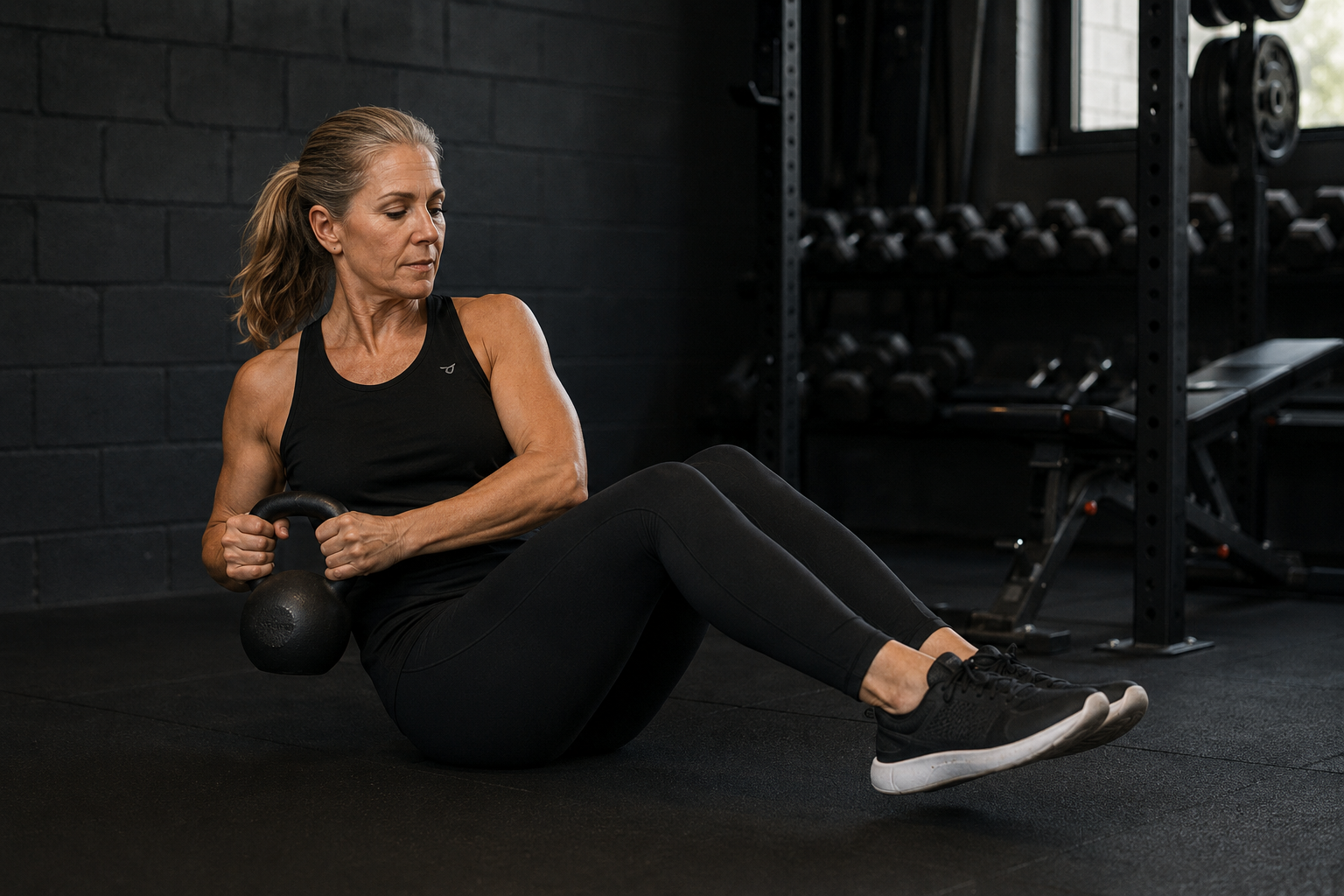
For me, that is one of the strongest arguments for continuing to lift weights as you get older. The goal is not necessarily to chase personal bests forever. It is to maintain enough strength and muscle to keep doing the things that matter outside the gym.
What Happens to Muscle as We Age?
Age-related loss of muscle mass and function is often discussed under the term sarcopenia.
Sarcopenia is a clinical condition, so I would not use the term to describe every person who has become a bit weaker with age. But the broader principle matters: maintaining muscle and strength becomes increasingly important as we get older.
Muscle is not just about appearance.
You need strength to get out of a chair, climb stairs, carry shopping, lift something off the floor, play with your children or grandchildren and remain physically independent.
Loss of strength can also become a difficult cycle.
You become weaker, so certain activities feel harder. Because they feel harder, you do less of them. Your overall activity drops and your physical capacity can decline further.
This is one reason I would rather address declining strength early than wait until everyday tasks have already become difficult.
Strength Training Still Works When You Are Older
There is sometimes an assumption that resistance training becomes less useful once you reach a certain age.
The evidence does not support that.
Research in older adults, including people with sarcopenia, consistently shows that resistance training can improve strength and physical function. Recent systematic reviews also report improvements in muscle mass, although the size of the response varies between studies and individuals.
International guidance reflects this. The World Health Organization recommends muscle-strengthening activity involving the major muscle groups on at least two days per week for older adults, alongside aerobic activity and, particularly later in life, activities that challenge balance and functional ability.
That does not mean everyone over 60 needs the same programme.
It means strength training should remain part of the conversation.
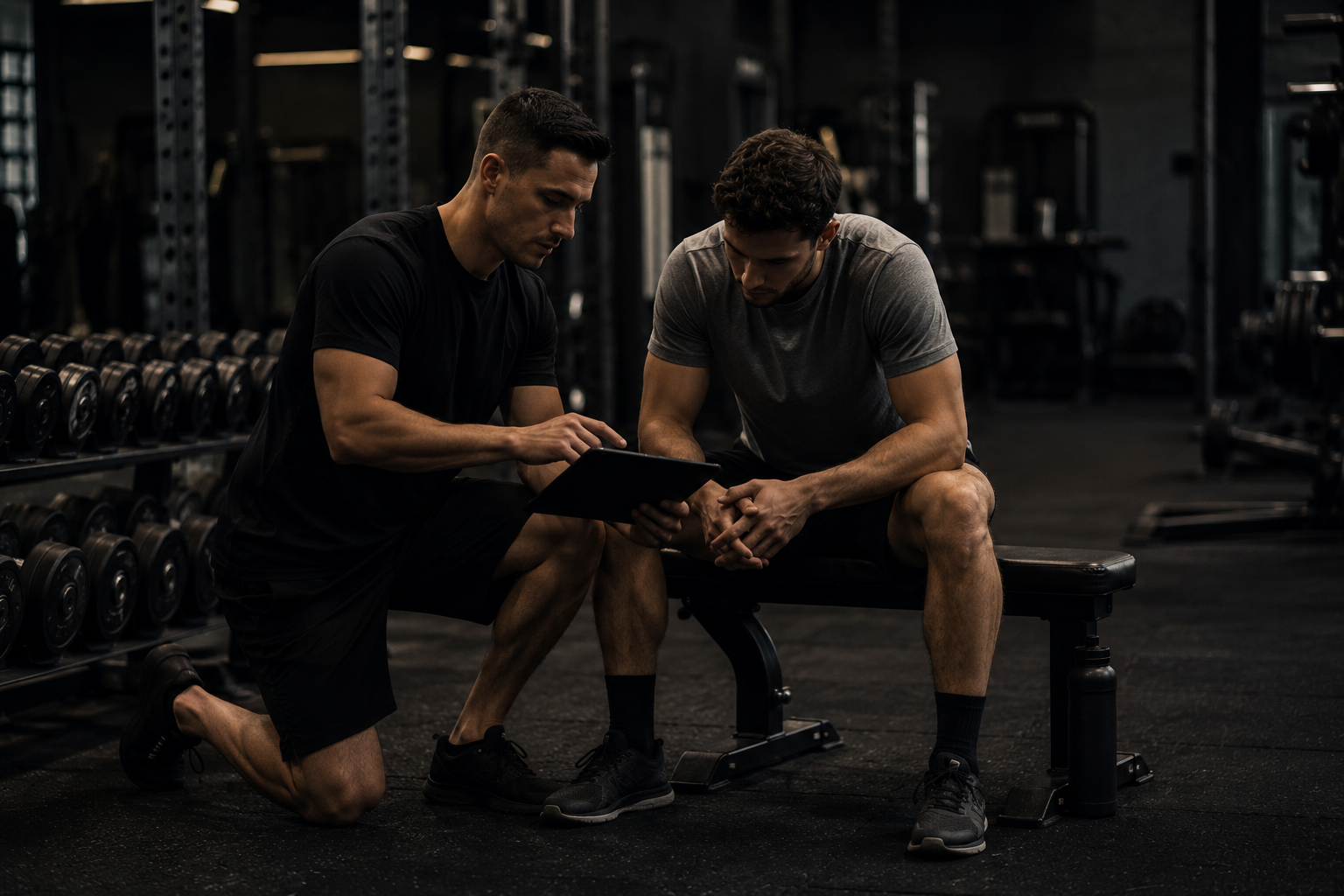
I have coached enough people to know that age alone tells me very little about what someone can do in the gym. Training history, current strength, confidence, joint health, medical history and previous injuries are usually far more useful when deciding where to start.
What Should Strength Training Look Like as You Get Older?
The basic principles do not suddenly change because you have had another birthday.
Your muscles still need an appropriate training stimulus. Exercises still need to be progressed over time. Recovery still matters.
What often changes is how I apply those principles.
For someone returning to training after years of inactivity, I may start with relatively simple movements and conservative loads. Someone who has trained consistently for 20 years may be able to train much harder from the beginning.
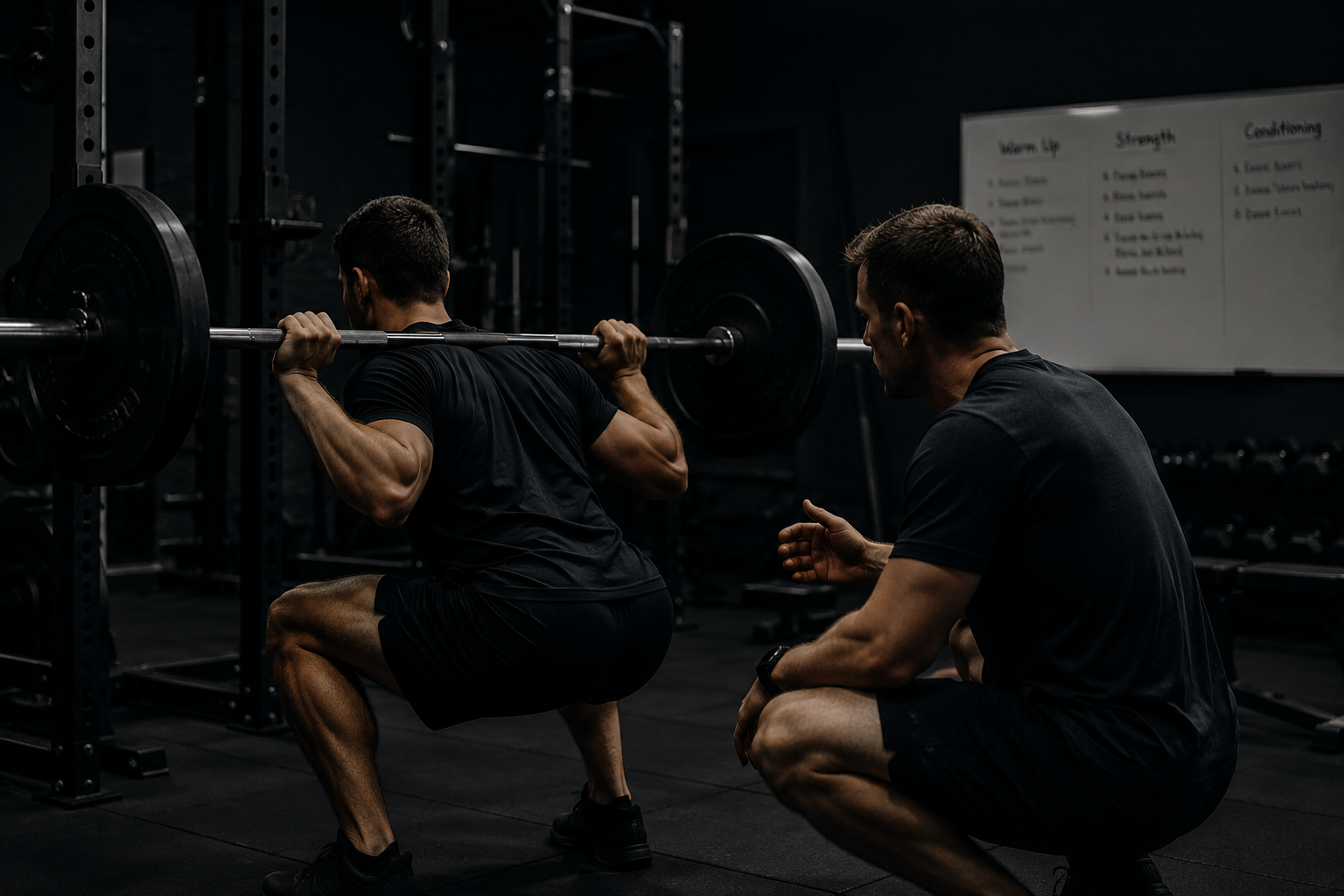
A sensible programme will usually include movements that train the major muscle groups and common physical tasks. That could include a squat or leg press variation, a hip-dominant movement, pushing, pulling, carrying and some direct work for areas that need it.
Machines, dumbbells, barbells, cables and bodyweight exercises can all be useful. There is no special piece of equipment that makes an exercise suitable for older adults.
The exercise needs to suit the person.
More importantly, the training should gradually become challenging enough to create an adaptation. Doing the same very light exercises indefinitely may feel safe, but it also limits what you can gain from training.
Research suggests that appropriately prescribed moderate and higher-intensity resistance training can improve strength in older adults. The exact programme does not need to be identical for everyone.
Starting Later Is Still Worth It
One of the most common mistakes I see is assuming that because someone has not trained for decades, there is little point starting now.
There is.
You do not need to undo 30 years of ageing. You need to improve your current physical capacity from where it is today.
If you have been inactive, even relatively basic strength work may initially be enough to make progress. Over time, the exercises, loads and training volume can be adjusted as you become stronger.
There are situations where I would want more information before pushing ahead.
Unexplained pain, significant changes in balance, repeated falls, major weakness, recent surgery or a medical condition affecting exercise tolerance may warrant assessment or medical guidance first.
Previous injuries are different. A history of back, knee or shoulder trouble does not automatically mean you should avoid strength training. It may simply mean the programme needs to be adjusted around your current capacity.
The aim is not to prove how hard you can train.
It is to build strength that you can keep using.
Practical Takeaways
- Strength and muscle become increasingly important for physical function as you age.
- Older adults can still make meaningful improvements with resistance training.
- Two or more strength sessions per week is a useful general target, but the programme should match your current ability and training history.
- Training should become progressively challenging rather than staying permanently easy.
- If pain, significant weakness, balance problems or medical issues are limiting you, get appropriate guidance before simply pushing harder.
Getting older does not remove the need for strength. If anything, it makes maintaining it more valuable.
I see strength training as an investment in what you want your body to still be capable of doing 10, 20 or 30 years from now.
If you want help building a sensible strength programme around your current fitness, training history and previous injuries, I offer both personal training in Cape Town and online coaching.
Ready to apply this properly?
Reading the article gives you the information. Coaching gives you the structure, accountability and adjustments needed to turn that information into measurable results.
Whether your goal is body transformation, strength, performance or long-term health, coaching provides a personalised roadmap built around you.